Dentures
Denture Basics: Information for First-Time Denture Wearers
We all hope our natural teeth will last a lifetime. But when this isn’t possible, dental professionals can offer a number of options to restore oral function and appearance.
Thanks to advances in polymer science, the vast majority of dentures are now made with extremely high-quality, durable plastic, and are stronger, more comfortable, and more natural looking than ever before. In short, these are not your grandmother’s dentures!
Denture Basics
A wide variety of dentures is available for individuals who are missing some or all of their teeth.
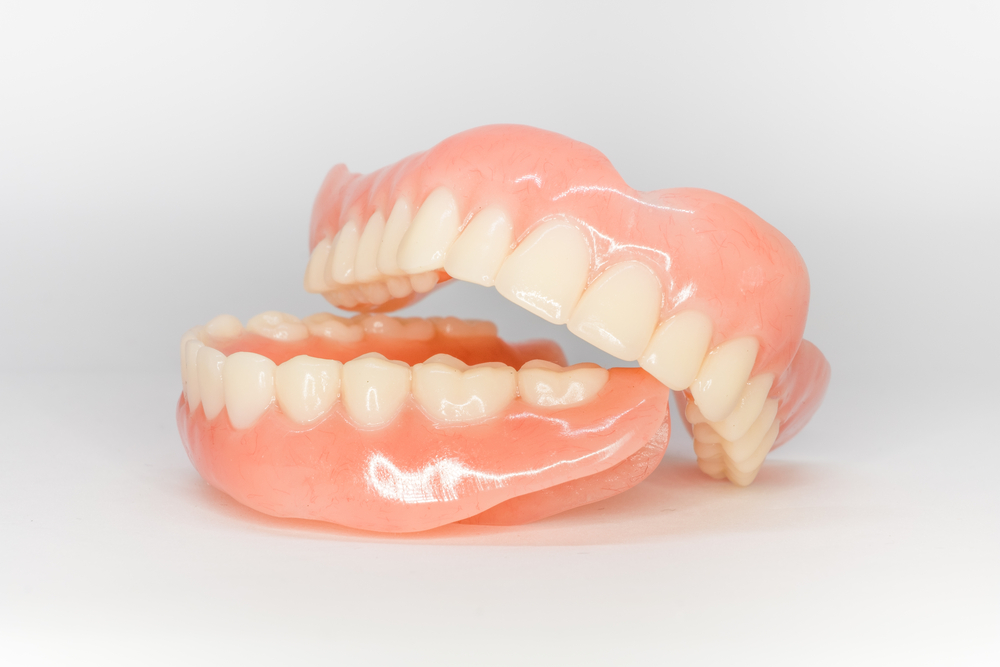
Complete dentures replace all of the teeth on the upper and/or lower jaw and rest on the gums that cover the jawbone. These dentures can be made more secure when attached to dental implants (implant overdenture). These overdentures bring the advantages of both worlds together. While stable in the mouth, the overdentures can also be removed by the wearer to clean eliminating any chance food or plaque gets stuck underneath.
Partial dentures replace only some of the teeth and attach to the remaining natural teeth with clasps. Your dentist will help you decide what type of denture and treatment plan are best for you.
Denture Types Defined
We all hope our natural teeth will last a lifetime. But when this isn’t possible, dental professionals can offer a number of options to restore oral function and appearance.
Thanks to advances in polymer science, the vast majority of dentures are now made with extremely high-quality, durable plastic, and are stronger, more comfortable, and more natural looking than ever before. In short, these are not your grandmother’s dentures!
Denture Basics
A wide variety of dentures is available for individuals who are missing some or all of their teeth.
Complete dentures replace all of the teeth on the upper and/or lower jaw and rest on the gums that cover the jawbone. These dentures can be made more secure when attached to dental implants (implant overdenture). These overdentures bring the advantages of both worlds together. While stable in the mouth, the overdentures can also be removed by the wearer to clean eliminating any chance food or plaque gets stuck underneath.
Partial dentures replace only some of the teeth and attach to the remaining natural teeth with clasps. Your dentist will help you decide what type of denture and treatment plan are best for you.
Denture Types Defined
• Conventional dentures: Replace all missing teeth in a jaw and rest on the gum tissue
• Implant overdentures: Replace all missing teeth in a jaw and connect to surgically placed dental implants
• Conventional partial dentures: Replace some missing teeth and are held in place with clasps that wrap around adjacent teeth
Getting your Dentures: The Process
The types of treatments needed before dentures can be placed and the amount of time those treatments take will vary depending upon a person’s overall oral health, the number and location of missing teeth, and the type of denture selected to replace those teeth. These treatments can include:
The types of treatments needed before dentures can be placed and the amount of time those treatments take will vary depending upon a person’s overall oral health, the number and location of missing teeth, and the type of denture selected to replace those teeth. These treatments can include:
• Digital Impressions or molds of the contour of the mouth, used as a model for the denture
• Extractions to remove any unhealthy teeth
• Implant surgery for those receiving implant overdentures
• Adjustments to achieve the best fit and level of comfort once dentures are placed
Individuals who require extractions or implant surgery will need to wait several weeks for the mouth to heal before dentures can be placed. For some people, a temporary or “immediate” denture can be placed in the mouth on the same day extractions are performed, and worn until the permanent denture is fitted.
What to Expect: Getting Used to Your Dentures
It takes some time to get used to the feeling of dentures in your mouth, after which you should be able to comfortably eat, speak, and smile. The following is normal when complete dentures are initially placed in the mouth:
What to Expect: Getting Used to Your Dentures
It takes some time to get used to the feeling of dentures in your mouth, after which you should be able to comfortably eat, speak, and smile. The following is normal when complete dentures are initially placed in the mouth:
• A feeling of fullness in the mouth, face, lips, and/or cheeks, which will subside quickly.
• Temporary minor changes in speech sounds, which will be more apparent to you than to others.
• Tip: Speaking slowly and enunciating precisely helps the tongue and facial muscles adapt more quickly.
• Changes in chewing patterns while getting used to the jaw movements required for chewing with dentures, which may take several weeks.
• Tip: Start with small pieces of soft food, gradually increasing the food’s firmness, and chew food on both sides of the mouth simultaneously with only your back teeth. A small amount of denture adhesive may help to stabilize your dentures.